 Hannah
 Christian Pregnancy App: Hanna
Luke 1:45: Blessed Is She Who Believed
Elizabeth honors Mary’s trust in God’s word. Her blessing invites faith without turning belief into a guarantee.
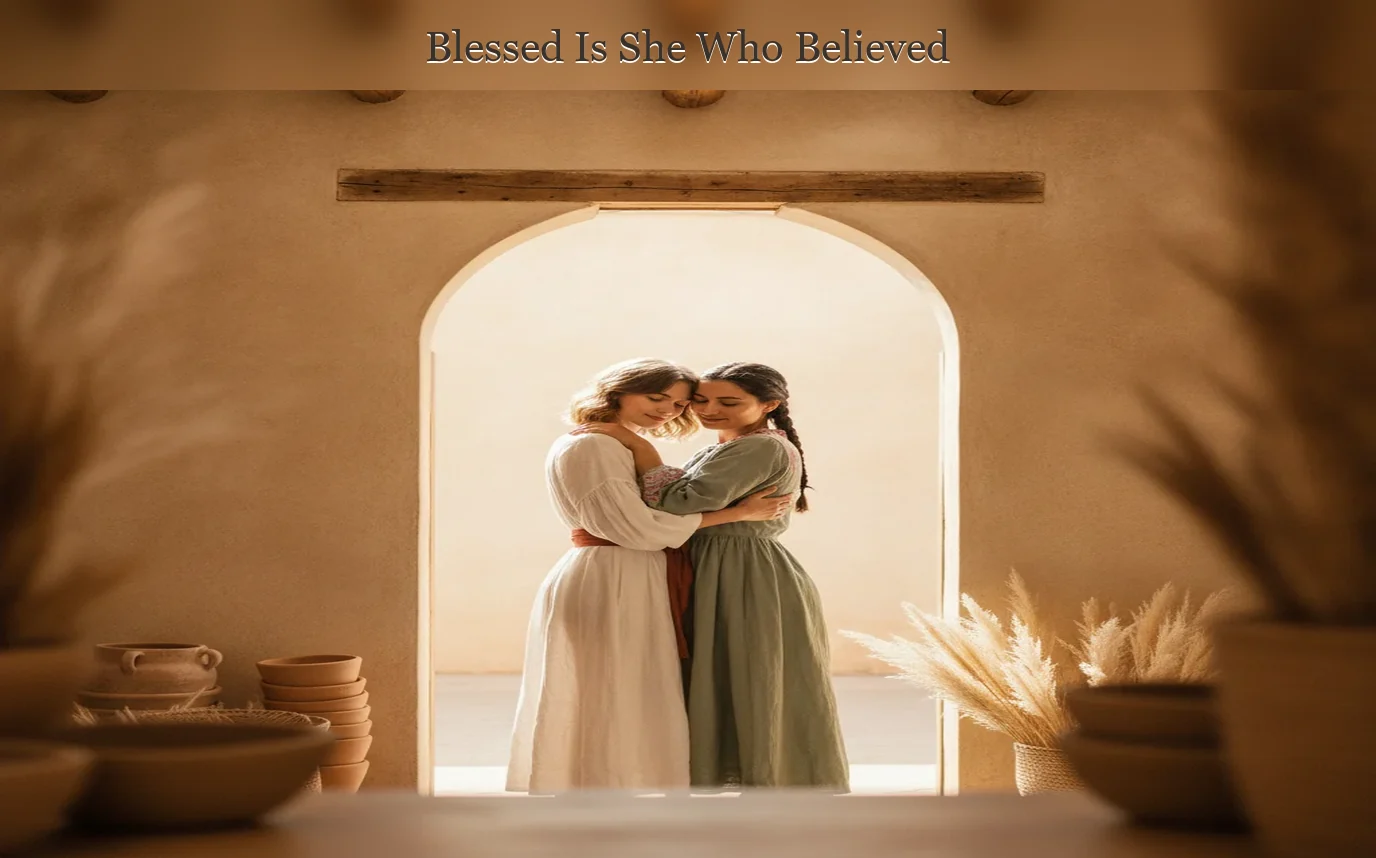
Quick answer. In Luke 1:45, Elizabeth blesses Mary because Mary believed God’s specific promise that she would bear Jesus. The verse honors trusting obedience, not faith as a way to secure any desired result. During pregnancy, it can remind you that God is present and faithful even when you do not know the outcome. It should never be used as a guarantee of an easy pregnancy, safe delivery, or medical healing.
| Reference | When it helps |
|---|---|
| Luke 1:39–45 | Mary visits Elizabeth and receives a Spirit-led blessing |
| Luke 1:26–38 | Mary hears God’s message and responds with willing trust |
| Luke 1:46–55 | Mary praises God’s mercy in the Magnificat |
| 1 Samuel 1:9–20 | Hannah brings her grief to God and is heard |
| 1 Samuel 2:1–10 | Hannah praises the God who sees the humble |
What does Luke 1:45 mean?
Luke 1:45 means that Mary was blessed because she trusted the particular word God had spoken to her. Elizabeth was honoring Mary’s receptive faith, not teaching that belief guarantees every hoped-for result.
The verse belongs to the account of Mary’s visit to Elizabeth. The angel Gabriel had told Mary that she would conceive Jesus, the promised Messiah. Mary did not control how the promise would unfold, but she received God’s message with trust and obedience.
When Elizabeth saw Mary, she was filled with the Holy Spirit and recognized the significance of Mary’s child. Her words, often remembered as “blessed is she who believed,” affirmed that God would accomplish what he had specifically promised Mary.
The blessing rests first on God’s faithfulness. Mary’s belief did not force God to act; it answered what God had already said. That distinction matters when this verse is read during pregnancy, waiting, or uncertainty.
What happens when Mary visits Elizabeth?
When Mary visits Elizabeth, two pregnant women meet within God’s unfolding plan: Elizabeth is carrying John the Baptist, and Mary is carrying Jesus. Their meeting becomes a moment of recognition, joy, and Spirit-given encouragement.
Luke 1:39–45 says Mary traveled to the hill country and greeted Elizabeth. The child in Elizabeth’s womb leaped, and Elizabeth spoke a blessing over Mary and the child she carried. She called Mary’s baby her Lord, recognizing his identity before his birth.
The visitation of Mary and Elizabeth is tender, but it is not sentimental. Both women had entered pregnancies shaped by wonder and vulnerability. Elizabeth had known years of barrenness, while Mary faced social risk and questions she could not fully answer.
God gave Mary companionship at a moment when she could easily have felt alone. Elizabeth did not dismiss the mystery or demand that Mary explain everything. She welcomed her, named God’s work, and strengthened her faith. Christian community can offer similar care by listening, praying, bringing practical help, and refusing shallow promises.
Does Luke 1:45 promise a healthy pregnancy?
No, Luke 1:45 does not promise a healthy pregnancy, painless birth, or preferred outcome to everyone who believes. It describes Mary’s trust in a unique promise about the birth of Jesus.
Using this verse as a medical guarantee places a burden on pregnant women that Scripture does not place on them. Fear, grief, questions, and even moments of doubt do not mean you have failed God. Faith may look like bringing those feelings honestly to him while receiving the care and support you need.
Mary’s faith did not protect her from hardship. Her obedience included uncertainty, social vulnerability, displacement, and later deep sorrow. The blessing of Luke 1:45 was not a promise that her path would be painless. It was an assurance that God’s word concerning Jesus would stand.
Prayer and prenatal care belong beside each other, not in competition. For questions about symptoms, medications, testing, labor, or your baby’s health, call your care team. Urgent symptoms need prompt medical attention; they are not a quiet-time problem to solve through stronger belief.
How can Luke 1:45 encourage you during pregnancy?
Luke 1:45 can encourage you to place today’s uncertainty in the hands of the God who remains faithful. It offers God’s presence as comfort without asking you to pretend you know how your pregnancy will unfold.
You can read the verse slowly and notice that Mary’s trust is directed toward the Lord’s word. Then anchor your prayer in promises Scripture gives to God’s people: he hears prayer, gives wisdom, welcomes the anxious, and stays near in suffering. These promises are firmer than a private prediction about a particular outcome.
Truths for Today
- God hears me. I can speak honestly rather than performing confidence.
- God is with me. Medical appointments and uncertain days are not outside his care.
- I do not control God through faith. Trust receives his grace; it does not demand a result.
- I may ask for help. Prayer, community, counseling, and medical care can stand together.
- My fear is not the measure of God’s faithfulness. He remains God when my emotions change.
A simple prayer may be enough: “Lord, help me trust what you have truly promised. Stay near to me and give my care team wisdom for today.”
How is the Magnificat connected to Luke 1:45?
The Magnificat is Mary’s response of praise after Elizabeth blesses her faith. In Luke 1:46–55, Mary turns attention away from herself and celebrates God’s mercy, holiness, and care for the humble.
Mary’s song shows what her belief was like. It was not positive thinking or confidence in her own strength. She remembered God’s character and placed her life within the larger story of his covenant mercy.
The Magnificat also carries Luke’s theme of reversal. God sees people the world overlooks, confronts human pride, and lifts the lowly. Mary, a young woman without worldly status, is given an honored place in the story of salvation.
This song can guide prayer during pregnancy. Praise does not require denying fear or forcing cheerful feelings. It can simply mean remembering who God is while you wait: merciful, attentive, holy, and trustworthy.
How are Mary, Elizabeth, and Hannah connected?
Mary, Elizabeth, and Hannah are connected through stories of prayer, motherhood, and God’s attention to the humble. Their stories show that God hears, but they do not create one pattern that every pregnancy must follow.
Hannah prayed through the anguish of infertility before giving birth to Samuel. Elizabeth conceived John after years of barrenness. Mary received a unique calling to bear Jesus through a miraculous conception. Each woman’s story has its own place in Scripture.
Mary’s Magnificat also echoes themes from Hannah’s song in 1 Samuel 2. Both women praise God for seeing the lowly and overturning human expectations. Yet Jesus is not simply another long-awaited child; he is the promised Messiah at the center of Mary’s praise.
These accounts allow us to celebrate answered prayer without treating pregnancy as proof of spiritual worth. They also leave room to sit compassionately with infertility, loss, complications, and prayers whose answers remain unseen. For another heard-prayer story, visit christianpregnancy.app/hannah-in-the-bible/ and read about Hannah’s honest prayer.
Faith belongs beside medicine, never instead of it. Call your care team for anything clinical.
Quiet Scripture Support
Hanna is launching as a gentle Christian pregnancy companion for prayer and Scripture beside responsible care. Join the email waitlist for launch updates.
Keep reading
Questions people ask
Who said “blessed is she who believed” in Luke 1:45?
Elizabeth said these words to Mary when Mary visited her during their pregnancies. Luke presents Elizabeth’s blessing as Spirit-led recognition of Mary’s faith and the identity of the child she carried.
What did Mary believe in Luke 1:45?
Mary believed God’s specific message that she would conceive Jesus and that he would fulfill God’s saving purpose. She trusted God’s word even though she could not see every step ahead.
Why did Mary visit Elizabeth?
Mary visited Elizabeth after Gabriel told her that Elizabeth was also expecting a child. Their meeting gave Mary confirmation, companionship, and a Spirit-filled blessing.
How far along was Elizabeth when Mary visited?
Luke 1 indicates that Elizabeth was in her sixth month when Gabriel spoke to Mary. Mary then traveled to visit her and stayed for about three months.
What is the visitation of Mary and Elizabeth?
The visitation is the meeting described in Luke 1:39–45. Elizabeth blesses Mary, the child in Elizabeth’s womb leaps, and Mary then responds with the praise commonly called the Magnificat.
Does Luke 1:45 mean faith guarantees answered prayer?
No. The verse concerns a specific promise God gave Mary about Jesus, not a guarantee that every personal desire will happen. Christian trust rests in God’s character while leaving the outcome with him.
What is the main lesson of Luke 1:45?
The main lesson is that God’s word is trustworthy and receptive faith is blessed. Mary models humble obedience, not a technique for controlling circumstances.
Can Luke 1:45 be used as a pregnancy prayer?
Yes, it can guide a prayer for trust, wisdom, and awareness of God’s presence. It should not be treated as a promise of an uncomplicated pregnancy or used in place of medical care.