 Christian Pregnancy App
Matthew 19:14: Let the little children come to me
Matthew 19:14 is Jesus’ answer when his disciples tried to turn parents away: “Suffer little children, and forbid them not, to come unto me: for of such is the kingdom of heaven” (KJV). “Suffer” here means “allow,” so Jesus is saying let them come. The verse shows that children are welcome to him and that his kingdom belongs to people who receive it as a child does, and it is not a verse about baptism or about every child’s eternal destiny.
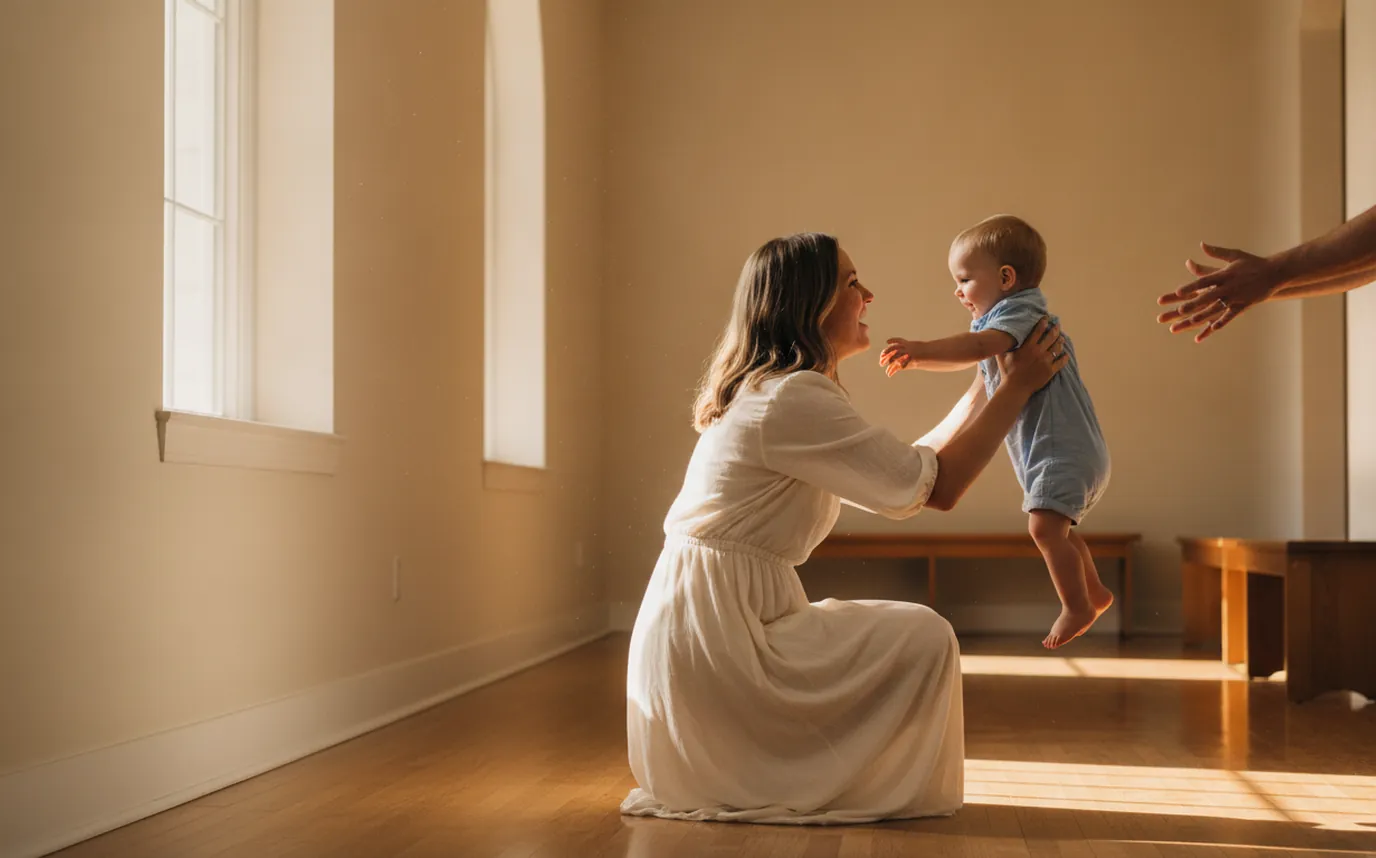
“Then were there brought unto him little children, that he should put his hands on them, and pray: and the disciples rebuked them. But Jesus said, Suffer little children, and forbid them not, to come unto me: for of such is the kingdom of heaven. And he laid his hands on them, and departed thence.”
Matthew 19:13–15 (KJV)What does Matthew 19:14 mean?
Parents brought their children to Jesus so he would put his hands on them and pray. The disciples thought this was a distraction and sent them away. Jesus corrected them, and the correction is the verse: let the children come.
The older English can mislead. “Suffer” does not mean to make them suffer, and it means to permit. A modern phrasing would be “let the little children come to me, and do not stop them.” What matters is the welcome. Jesus does not treat children as an interruption to the important work. They are part of it.
What does “of such is the kingdom of heaven” mean?
Jesus says the kingdom belongs to “such” as these. The parallel in Mark makes the meaning clearer: “Whosoever shall not receive the kingdom of God as a little child, he shall not enter therein” (Mark 10:15). A child receives what is given without earning it and without a long résumé. Jesus is pointing adults to that posture of trust.
Many readers also take the line to say that children are included in the people Jesus welcomes. That is plain from the scene itself, because he lays hands on them and blesses them. Beyond that, Christians differ on what the verse implies, and it is wiser to read it for what Jesus does than to build a doctrine on one phrase.
Where the story appears in the Gospels
| Gospel | What it adds |
|---|---|
| Matthew 19:13–15 | Children are brought for prayer, and Jesus lays hands on them. |
| Mark 10:13–16 | Jesus is “much displeased” with the disciples, and he takes the children up in his arms and blesses them. |
| Luke 18:15–17 | Luke says “infants” were brought, so even the smallest are included. |
Reading the three together gives a fuller picture. Jesus is not merely patient. He is displeased at the obstruction, and he is physically warm: he takes them in his arms. That is a good picture to hold if you are praying for a child.
What Matthew 19:14 does not settle
People sometimes use Matthew 19:14 to argue for infant baptism, and others use it against. The passage does not mention baptism, so it cannot decide that question. It also does not address what happens to a baby who dies, although many Christians find comfort in how Jesus treats children and in David’s words about his own lost child, “I shall go to him” (2 Samuel 12:23). If that is the question you are carrying, Bible verses for miscarriage goes slowly through the passages people turn to.
How families use Matthew 19:14
- Blessing a child at bedtime. Many parents rest a hand on their child and pray, echoing the way Jesus “laid his hands on them.”
- Welcoming children at church. The verse is a standard reason for children’s ministry and for keeping them in services.
- At a dedication. Churches read it at infant dedication as part of promising to welcome the child into the congregation.
- During pregnancy. It is a natural verse to pray over a baby who is not yet born, with a hand on your belly.
It sits well with Proverbs 22:6, which is about teaching a child, and with Psalm 127:3, which calls children a gift. Together they say that children are welcomed, taught and received as a gift. For more Bible passages on mothering, see Bible verses about motherhood, and for how the Christian pregnancy app we are building will fit with pregnancy and prayer, see the homepage.
A short prayer for a child, born or not yet born
Jesus, you welcomed children when others sent them away. I bring my child to you today, born or not yet born. Put your hands on them and bless them. Help me to bring them to you every day. Amen.
For the prayers you pray over your child
The app is not released yet. Leave your email and we will write once, at launch.
Questions about Matthew 19:14
What does Matthew 19:14 mean?
It means Jesus welcomes children and does not want anyone to stand in their way. The disciples tried to send the parents away, and Jesus told them to let the children come. He then says the kingdom belongs to people like them, which points adults toward trusting like a child.
What does “suffer little children” mean?
In the King James Version “suffer” means “allow” or “permit.” The phrase says “let the little children come to me.” It has nothing to do with children suffering. Modern translations usually render it with “let” or “allow,” which is clearer to today’s readers.
Why did the disciples rebuke the people bringing children?
The Gospels do not say exactly, but the likely reason is that they saw children as unimportant next to Jesus’ teaching and healing. Mark adds that Jesus was “much displeased” with them. The scene corrects the idea that children are unworthy of his attention.
What did Jesus say about children in the Bible?
He welcomed them (Matthew 19:14), told his disciples to receive the kingdom like a child (Mark 10:15), and warned against causing “little ones” to stumble (Matthew 18:6). He also said their angels always see the face of his Father (Matthew 18:10). Together they show a high regard for children.
Is Matthew 19:14 about baptism?
No. The passage does not mention baptism, and Jesus lays hands on the children and blesses them. Both sides of the infant baptism question sometimes cite it, but it cannot settle the matter. It is better read as a picture of welcome and blessing.
Can I use Matthew 19:14 at a baby dedication?
Yes, it is one of the most common readings. Along with Mark 10:16, it shows Jesus blessing children, which fits a service where the church prays over a child. Pastors often pair it with 1 Samuel 1:27–28, where Hannah gives Samuel to the Lord.
Which Gospels record Jesus welcoming the children?
Three of the four Gospels tell the story. Matthew 19:13–15 has Jesus lay hands on the children and pray, Mark 10:13–16 says he was much displeased with the disciples and took the children up in his arms, and Luke 18:15–17 says infants were brought to him. Read together, they show both his patience and his warmth.